Exquisite designs featuring globally compliant, certified manufacturing processes from China's leading export hub.

Understanding market dynamics, consumer semantics, and compliance demands.
In the contemporary B2B apparel trade, CE Certified Women's Cultural Fashion represents one of the fastest-growing niches. It bridges the gap between deep-rooted heritage designs and stringent global safety, quality, and environmental regulations. Today's international buyers are no longer searching merely for generic garments; search intents have shifted toward products that show high "Information Gain"—namely, verified compliance, authentic localized craftsmanship, and supply chain transparency. As a result, factories that hold CE certification for textiles stand at the forefront of the global fashion market, offering certified proof of physical safety, fiber non-toxicity, and ethical production practices.
The global commerce landscape for women's cultural fashion has evolved past the era of unstandardized home-industry setups. Large scale operations demand strict adherence to international standards. Whether it's the importation of modest apparel to the Middle East and Europe, or the distribution of Y2K heritage denim in the United States, enterprise buyers look for factories equipped to deal with regulatory frameworks such as Europe's REACH, GPSR (General Product Safety Regulation), and CE-related physical compliance. Guangzhou Dahab Fashion Co., Ltd. serves as a prime example of an enterprise that successfully merges cultural aesthetic engineering with rigid industrial quality protocols.
Corporate Capabilities, Design Philosophy, and Advanced Global Supply Solutions
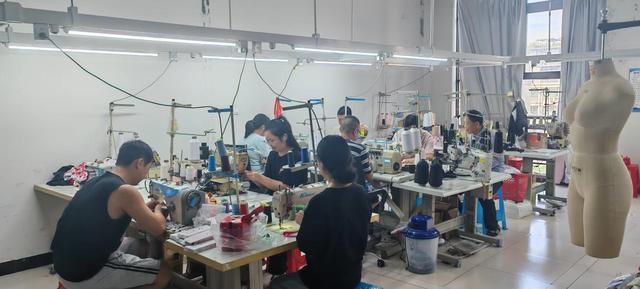
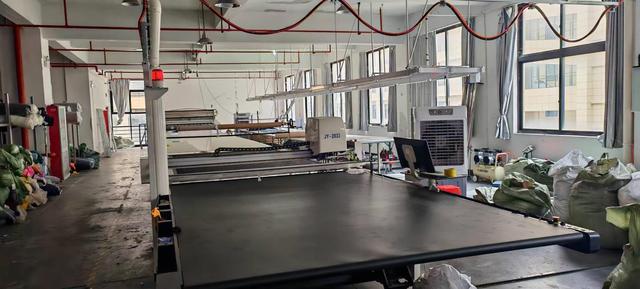
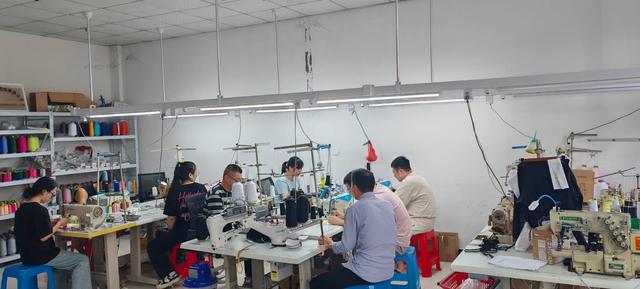
Guangzhou Dahab Fashion Co., Ltd. is a professional women's clothing manufacturer located in Guangzhou, Guangdong, China. Established in 2012, the company specializes in the design, development, and production of fashion apparel for international brands, wholesalers, retailers, boutique stores, and e-commerce businesses. With a modern manufacturing facility spanning over 16,000 square meters and a workforce of more than 260 skilled employees, Dahab Fashion provides comprehensive OEM and ODM garment solutions to customers worldwide.
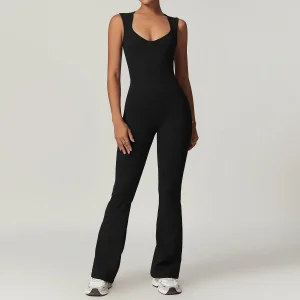
The company offers a diverse range of women's clothing products, including casual wear, fashion dresses, blouses, tops, skirts, knitwear, outerwear, loungewear, business attire, and seasonal fashion collections. By combining market-driven design concepts with efficient production capabilities, Dahab Fashion helps customers create competitive apparel collections that meet changing consumer preferences across global markets.
Supported by an experienced design and product development team, the company continuously monitors international fashion trends, fabric innovations, and garment technologies. This enables Dahab Fashion to deliver stylish, functional, and commercially viable products while supporting customers with collection planning and product customization.
Quality management is integrated throughout the manufacturing process. From fabric sourcing and pattern development to cutting, sewing, finishing, and final inspection, every stage is carefully controlled to ensure consistency, durability, and customer satisfaction. The company also provides flexible private-label services, including logo application, custom packaging, fabric selection, and branding support. With products exported to North America, Europe, the Middle East, Australia, and other international regions, Guangzhou Dahab Fashion Co., Ltd. has established long-term partnerships with clients seeking reliable apparel manufacturing solutions. The company remains committed to innovation, quality, and professional service as a trusted women's clothing manufacturer providing fashion apparel, casual wear, and OEM ODM garment solutions worldwide.
How modern women's cultural fashion bridges the gap between regional identity and modern wearability.
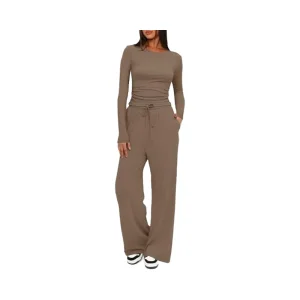
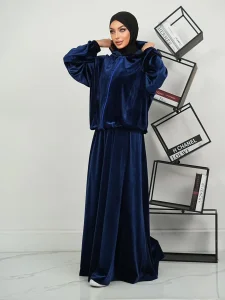
Adapting classic structures like the Abaya or two-piece sets for contemporary European and Middle Eastern workspaces. We combine breathable organic fibers with geometric pattern styling to meet local dress codes while adhering to international environmental norms.
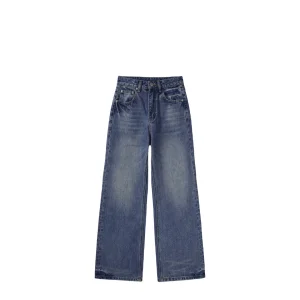
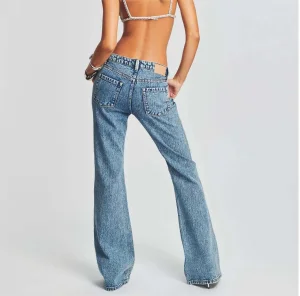
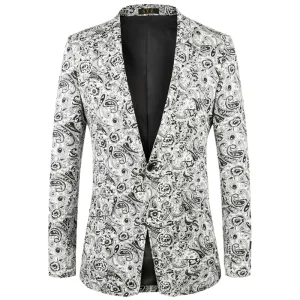
Y2K denim collections incorporating traditional oriental embroidery, rhinestone motifs, and historic Paisley design paths. These products are popular among North American and European youth demographics seeking localized cultural depth combined with high-street utility styling.
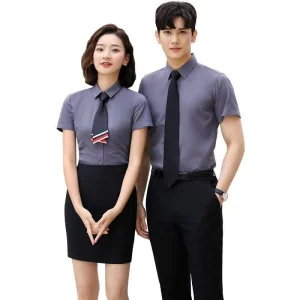
Customized business workwear designed for multi-ethnic corporate environments. By offering customized pattern alterations, sizing adjustments, and flexible fabric choices, we ensure regional comfort requirements align with corporate dress codes.
Integrating digital virtualization, circular logistics, and advanced CAD technology (2025 - 2030).
The manufacturing future of women's cultural fashion lies in the intersection of digital tech and sustainable, high-efficiency fabrics. The following roadmap outlines the strategic phases designed to maximize production efficiency while reducing ecological footprint.
| Implementation Phase | Technological Focus | Key Performance Indicators (KPIs) | Compliance Standards Met |
|---|---|---|---|
| Phase 1: Digitization (2025-2026) | 3D virtual prototyping, AI-guided layout optimization, CAD automatic grading system. | Reduce fabric waste by 18%; shorten sample approval time from 14 days to 48 hours. | ISO 9001:2015 Quality Management Protocols. |
| Phase 2: Eco-Integration (2027-2028) | High-proportion organic cotton integration, GRS (Global Recycled Standard) polyester blend weaving. | 75% of materials sourced from sustainable, zero-pesticide, or recycled fibers. | OEKO-TEX Standard 100, REACH Chemical Regulations. |
| Phase 3: Smart Supply (2029-2030) | IoT-enabled supply line tracking, automated RFID tags for retail-ready batches, robotic hanger integration. | 99.8% order accuracy, direct API connection with international client ERP systems. | EU GPSR (General Product Safety Regulation) compliance. |
Why the Guangzhou fashion hub maintains a dominant competitive edge in global B2B fulfillment.
China's apparel manufacturing sector remains the world's most resilient supply chain ecosystem due to its complete vertical integration. As a representative exporter located in Guangzhou, Guangdong, Guangzhou Dahab Fashion Co., Ltd. leverages a highly concentrated industrial cluster. Within a 50-kilometer radius of our production facility, we have access to thousands of fabric vendors, yarn manufacturers, dye houses, button suppliers, and logistics hubs. This concentration minimizes lead times and shields our production schedules from unexpected global shipping delays or raw material shortages.
Additionally, modern Chinese garment factories rely on highly digitized logistics platforms. Our integration of ERP software allows real-time material tracking, dynamic capacity scheduling, and automatic replenishment. When international buyers face sudden demand spikes in their localized market niches, Dahab Fashion can transition designs from digital templates into finished, packaged containers within weeks—a process that typically takes months in less integrated regions.
Ensuring total brand safety and chemical compliance in strict international markets.
For garments sold in Western markets, safety standards are non-negotiable. While CE marking is traditionally associated with hardware and medical devices, textile manufacturers use parallel regulatory pathways to ensure safety compliance. Under the General Product Safety Regulation (GPSR) in Europe, textiles and cultural apparel must undergo rigorous tests for mechanical safety, chemical formulation, and flammability. Our manufacturing processes enforce these rules at three key check points:
Every dye, pigment, and auxiliary chemical used in our manufacturing process must be free of azo dyes, harmful heavy metals, and forbidden plasticizers (phthalates), complying with EU Regulation No 1907/2006.
Buttons, zippers, metal rivets, and decorative rhinestones are tested for attachment strength to prevent choking hazards and comply with physical textile safety guidelines (EN 14682).
For outerwear, loungewear, and loose-cut cultural fashion, fabrics are tested to ensure flame propagation speeds do not exceed legal limits, protecting consumers during daily wear.
Deep search-intent answers on compliance, production capacity, and custom sourcing.
Garments exported to the European Union must align with the General Product Safety Regulation (GPSR). A compliant factory must source raw materials certified under OEKO-TEX Standard 100 or chemical-safe standards that pass REACH analysis (limiting heavy metals, AZO dyes, and formaldehydes). In addition, physical safety guidelines (like EN 14682 for drawstrings and small attached parts like rhinestones or beads) are rigorously tested to ensure mechanical safety, making the production processes safe for direct consumer sale in highly regulated jurisdictions.
At Guangzhou Dahab Fashion Co., Ltd., we support flexible production models designed to fit varying business scales. Our standard MOQ for custom private-label clothing typically ranges between 100 to 300 pieces per style/color, depending on the complexity of the design and the specific fabric choices. This structure allows retailers to test localized capsule collections without carrying massive inventory risks.
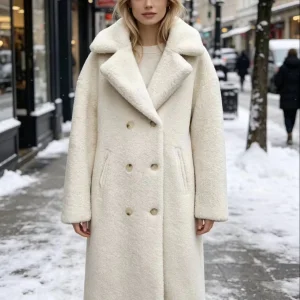
We actively design and manufacture eco-friendly products, such as our GRS-certified recycled polyester winter coats and organic cotton lounge sets. Our dyeing partner mills utilize closed-loop water treatment systems, and our raw material sourcing focuses on minimal footprint fibers. We provide clients with transaction certificates (TCs) upon request to verify the organic or recycled origins of the yarn.
The standard timeline starts with digital design matching and paper pattern development (2 to 5 days). Once the sample is approved, raw material sourcing and production cutting/sewing takes approximately 15 to 25 days. Quality control, final pressing, and custom packaging add another 3 to 5 days. Generally, ocean freight orders are completed and ready for port dispatch within 30 to 40 days after the initial deposit is confirmed.
Yes. Our experienced pattern department uses advanced CAD systems containing pre-programmed size templates for North American, European, Middle Eastern, and Australian demographics. Whether you require specific plus-size adjustments, petite fits, or cultural silhouettes like relaxed modesty patterns, our designers can easily calibrate sizing specifications according to your target consumer profile.
We enforce a strict four-stage quality control system: (1) Pre-production fabric inspection via the standardized 4-point system; (2) In-line cutting and sewing audits to verify seam strength and structural alignment; (3) Post-production metal detection scans to ensure no needle remnants exist; and (4) Pre-shipment statistical sampling audits following AQL 2.5 parameters.
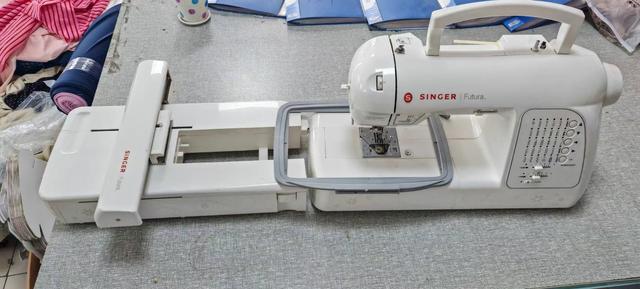
A glimpse inside our 16,000 square meter state-of-the-art facility in Guangzhou.
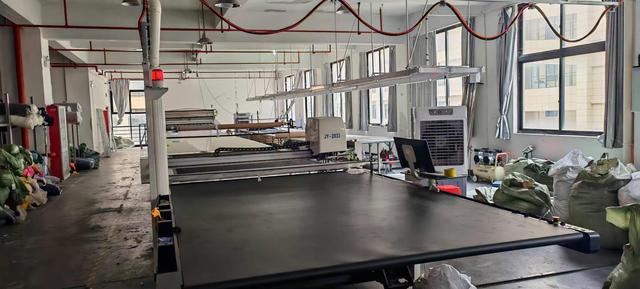
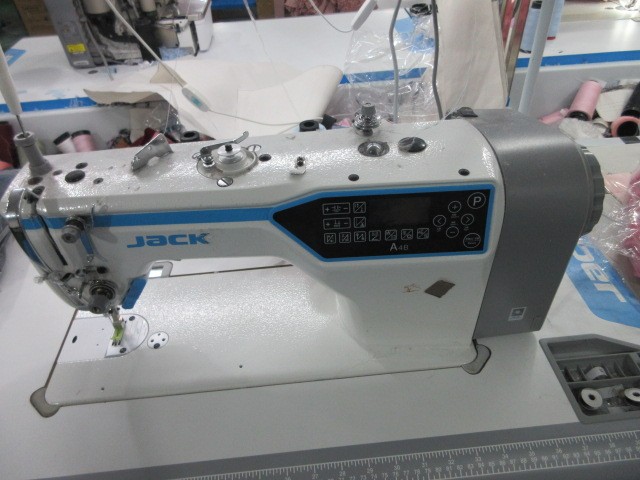
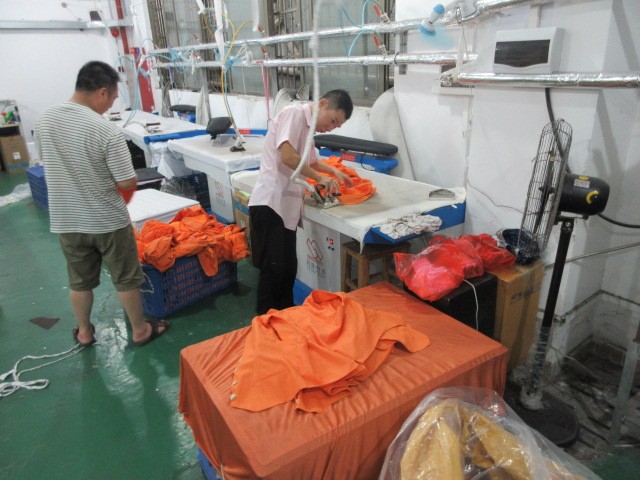
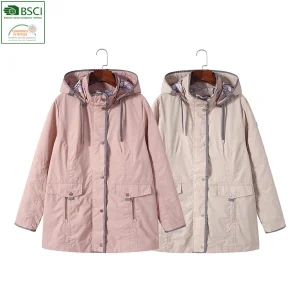
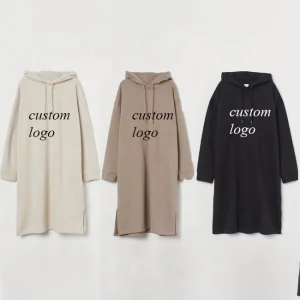
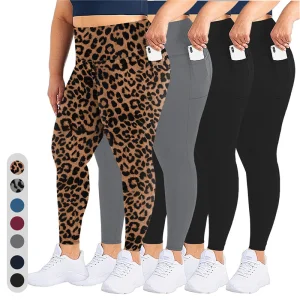
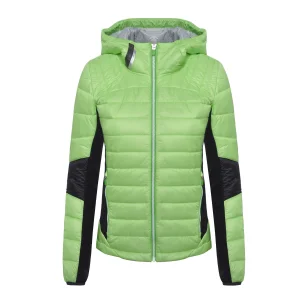
Browse more of our premium OEM/ODM designs optimized for worldwide export.
 Dahab Fashion