Choosing women’s clothing for global buyers requires more than following seasonal trends. The question “what are women's clothes” opens a wider discussion about purpose, comfort, culture, and quality. A lightweight linen dress may suit a Mediterranean summer, yet feel unsuitable in a humid city with heavy rain. A fitted blazer may look polished, but its sleeve length and shoulder width can vary greatly across markets.
Experienced buyers examine fabric weight, stretch, stitching, colorfastness, and care requirements before placing orders. They compare size charts with local customer measurements, rather than trusting labels such as small or large. They also study climate, workplace customs, cultural preferences, and shopping habits. Soft cotton, adjustable waists, and breathable linings often improve customer satisfaction. Small details matter.
Reliable sourcing decisions also depend on transparent suppliers and documented quality checks. Buyers should request samples, test repeated washing, and inspect seams, buttons, zippers, and hems. Product descriptions must match the actual garment. Claims about organic fibers, recycled materials, or ethical production need credible evidence. Local labeling, safety, and consumer protection requirements should also be reviewed before distribution.
There is no universal formula. Even skilled teams make mistakes when they depend too heavily on trend reports or limited samples. A bright color may sell well in one region and remain untouched in another. This guide explores practical methods for selecting women’s apparel with stronger market fit, clearer supplier communication, and more dependable customer value. The goal is not perfect prediction. It is better preparation.
McKinsey’s fashion industry growth forecasts can help buyers read global demand before placing orders. Forecasts are directional, not guarantees. They show where consumer confidence, fashion spending, and category growth may strengthen or slow. A buyer should compare these signals with local sales data, climate patterns, income levels, and customer feedback.
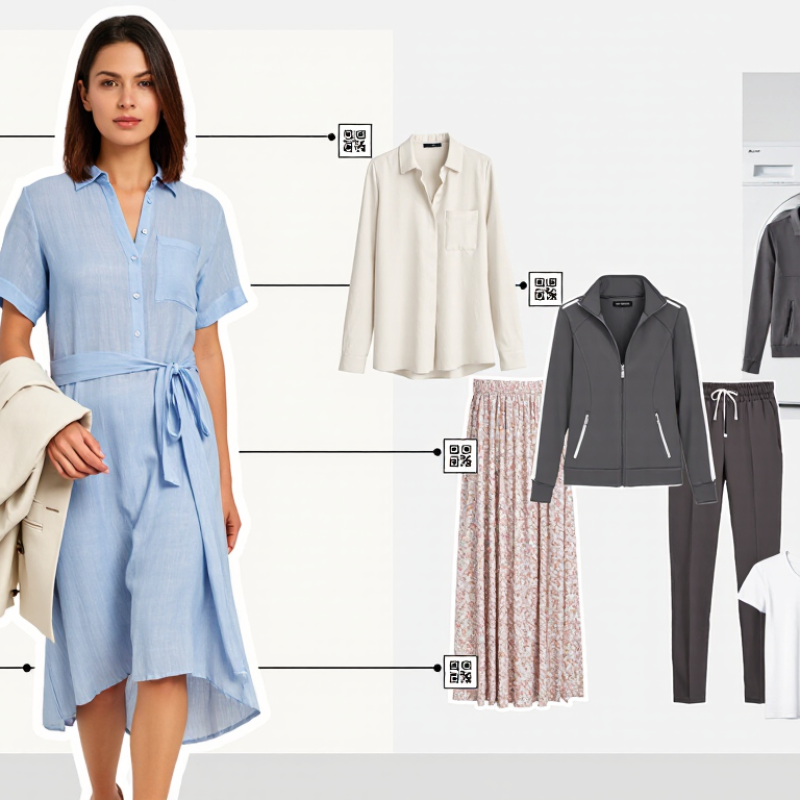
Consider practical differences between markets. Lightweight dresses may suit warm cities, while layered knitwear performs better in colder regions. Modest cuts can matter in some communities. Extended sizing may also reveal overlooked demand. Color preferences change too. Neutral shades often support repeat purchases, but local seasonal colors can create stronger attention. Fit remains critical. A beautiful design fails when measurements do not match regional body shapes.
Keep the forecast visible, but do not let it make every decision. My first demand map would be incomplete without return reasons and store-level conversations. That sounds simple. It is not. Buyers should test small quantities, review sell-through weekly, and adjust future orders carefully. McKinsey’s analysis offers authoritative market direction, while verified local evidence improves reliability. Weather disruption, currency pressure, and changing household budgets can quickly weaken an attractive opportunity. Leave room for correction. Global demand rewards careful learning more than confident guessing.
How to Choose Women’s Clothing for Global Buyers?
Women’s buyers should be segmented by size, culture, climate, and purchasing power. Statista Market Insights estimates global apparel revenue at roughly US$1.8 trillion in 2025. That scale hides major regional differences. Use country-level revenue, online shopping rates, and age data from Statista before planning product quantities. A broad “international woman” profile is too vague.
Size data must be localized. Compare local measurement charts, return reasons, and customer reviews. A medium in one market may feel narrow elsewhere. Offer garment measurements, not only labels. Record waist, hip, sleeve, and inseam details in centimeters. Fit testing with real users is stronger than relying on factory assumptions. Still, size surveys can be incomplete.
Culture affects color, coverage, fabric, and occasion. Avoid stereotypes. Test product images with local reviewers. Climate also changes fabric weight, layering, and drying needs. Köppen-Geiger climate classifications can guide seasonal assortments, while World Meteorological Organization reports help track unusual heat and rainfall patterns. Buyers in humid cities may prefer breathable fabrics and shorter drying times. Cold regions may need insulation without excessive bulk. The International Energy Agency notes that cooling demand is rising with global temperatures, but this does not automatically prove demand for lighter clothing. That is where careful testing matters. Small samples first. Then adjust by sales, returns, and feedback.
How to Choose Women’s Clothing for Global Buyers?
This comparison combines official female-population data with practical assortment indicators: climate, regional clothing-size conventions, and cultural modesty considerations. Use the figures to prioritize market research, grading, fabric weight, layering, sleeve length, and coverage options rather than applying one global sizing strategy.
Population source: World Bank, female population (% of total), 2023. Climate classification: Köppen–Geiger climate groups. Size references: commonly used regional apparel conventions. Market sizing should be validated with local sales and return data. Statista Consumer Market Insights identifies women’s apparel as a major segment of the global apparel market.
Global women’s clothing requires more than converting one country’s size chart. Body proportions, preferred ease, and fabric behavior vary across markets. ASTM D5585 offers useful reference tables for adult female body measurements, but it is not a universal fit rule. Use it as a starting point, then validate measurements with local customer data and product samples.
Our first size chart looked precise, yet returns remained high. The problem was sleeve length. Bust measurements matched, but shorter customers found the cuffs covering their hands. A fit panel should include varied heights, body shapes, and ages. Measure bust, waist, hip, shoulder, and inseam with consistent methods. Test garments while standing and sitting. Record fabric stretch, seam placement, and recovery after washing. Small details matter.
Return-rate benchmarks should be practical, not borrowed blindly. Track returns by style, size, country, and stated reason over a rolling 90-day period. Separate poor fit from damage, preference changes, or delivery errors. Compare each product with similar products in your own catalog. A 20% increase above its normal fit-related return rate deserves investigation. Check product measurements, model proportions, and customer reviews together. We missed this connection once. Better data would have exposed it earlier.
| Buyer Market | Recommended Size Presentation | Primary Body Measurements | ASTM Reference | Measurement-Control Target | Online Return-Rate Planning Benchmark | Recommended Action |
|---|---|---|---|---|---|---|
| North America | US numeric size plus bust, waist, and hip measurements in inches and centimetres. | Bust, natural waist, hip, back waist length, sleeve length, inseam. | ASTM D5585 for women’s body measurements; ASTM D5219 for body-measurement terminology. | Keep finished-garment measurements within the approved specification tolerance, normally ±1.0 cm for key circumference points after grading. | 20–35% for online women’s fashion planning; investigate when the product exceeds 35% for two consecutive reporting periods. | Show a measurement chart beside the size selector and state whether measurements describe the body or the finished garment. |
| United Kingdom and Ireland | UK numeric size with centimetre measurements; do not rely only on direct US-to-UK conversion. | Bust, waist, hip, shoulder width, sleeve length, inside leg. | ASTM D5585 can support the underlying measurement method; publish the retailer’s own garment specification separately. | Confirm at least three fit-critical points on the production sample: bust, waist, and hip. Use a documented tolerance table for each style. | 20–35% planning range; size-related returns above 25% should trigger fit-page and pattern review. | Use dual labels such as “UK 12 / body measurements 91–96–76–101 cm,” with the exact order clearly defined. |
| European Union | EU numeric size with centimetre body measurements; include a country-neutral measurement chart. | Bust, waist, hip, height, shoulder, sleeve, and inseam where relevant. | ASTM D5585 is a useful reference for measurement definitions; it should not be treated as a mandatory EU size-labeling law. | Use one consistent measuring protocol across suppliers, including posture, tape tension, and measurement landmarks. | 20–30% planning range for online women’s apparel; monitor the proportion attributed specifically to “too small” or “too large.” | Display centimetres first and provide a separate conversion guide rather than merging multiple regional size systems into one label. |
| Australia and New Zealand | AU/NZ numeric size with centimetre measurements and a visible international conversion column. | Bust, waist, hip, height, sleeve length, and inside leg. | ASTM D5585 for women’s body-measurement reference; apply the same internal tolerance rules used for other markets. | Validate fit on the intended size range, not only on the sample size; check grading consistency between adjacent sizes. | 20–35% planning range; a sudden increase of more than 5 percentage points month over month warrants investigation. | State whether the garment is designed for a regular, relaxed, slim, or oversized fit and provide model measurements. |
| East Asia | Use centimetre body measurements as the primary reference; avoid assuming that Western numeric conversions are equivalent. | Bust, waist, hip, shoulder width, height, sleeve length, and garment length. | ASTM D5585 may be used as a neutral measurement vocabulary; local anthropometric data should determine the final size curve. | Verify shoulder width, armhole, sleeve length, and garment length in addition to bust, waist, and hip. | 15–30% planning range for online women’s apparel; distinguish body-shape mismatch from simple label-conversion errors. | Prioritize direct centimetre measurements and include flat-garment measurements for structured products such as jackets and woven dresses. |
| Gulf and other multicultural markets | Use centimetre measurements with modesty, layering, and preferred ease clearly described. | Bust, waist, hip, upper arm, shoulder, sleeve, garment length, and inside leg where applicable. | ASTM D5585 for consistent body-measurement definitions; add style-specific ease requirements to the product specification. | Record both body measurements and finished-garment measurements because layering can materially affect perceived fit. | 20–35% planning range; review returns when “too tight,” “too short,” or “not as expected” exceed 10% of orders. | Describe opacity, lining, stretch, ease, and intended layering. Offer garment length in centimetres for dresses, tunics, and outerwear. |
| All global markets | Use one master measurement chart, then localize the displayed size label and units without changing the underlying measurements. | Minimum core set: bust, waist, hip, height; add shoulder, sleeve, inseam, and garment length by product type. | ASTM D5585 and ASTM D5219. | Measure pre-production and production samples using the same protocol; document point of measure, sample size, tolerance, and grading increments. | Use return-rate bands as internal operating benchmarks, not as universal industry standards. Track total returns and size-related returns separately. | Run a monthly dashboard covering return rate, size-related return share, exchange rate, fit comments, review sentiment, and conversion by size. |
| Interpretation note: ASTM standards provide measurement definitions and procedures; they do not automatically determine a universal international size conversion. Return-rate ranges above are practical planning benchmarks for online women’s apparel, not official ASTM or government thresholds. Actual results vary by garment category, price, fit preference, season, channel, and return policy. | ||||||
| Reference basis: ASTM International, ASTM D5585, “Standard Tables of Body Measurements for Adult Female Misses Figure Type, Size 2–20”; ASTM International, ASTM D5219, “Standard Terminology for Body Dimensions for Apparel Sizing”; return-rate benchmarks should be calibrated against the buyer’s own order and return data. | ||||||
Textile Exchange’s global fiber-market data offers a practical starting point for women’s clothing decisions. Its Materials Market reporting tracks fiber production and material trends worldwide. Buyers can compare cotton, man-made cellulosic fibers, recycled fibers, and synthetics more carefully.
However, market share does not automatically indicate better performance. A lightweight blouse needs breathability, color stability, and comfortable drape. A winter jacket needs warmth, strength, and reliable shape retention. Fabric testing must support the market data.
In sourcing reviews, I check fiber content beside washing results, supplier documentation, and customer expectations. A shirt may feel smooth in a showroom but shrink after repeated washing. That detail can damage returns and trust.
Textile Exchange data helps identify broader supply patterns, yet it cannot replace factory-level verification. Buyers should review the report’s publication year, definitions, and regional limitations. Data changes.
Some comparisons also remain imperfect because recycled and conventional fibers may use different measurement methods.
Tips: Match fiber choices with climate, garment use, and care habits. Request fabric samples before approving bulk production. Test shrinkage, pilling, colorfastness, and seam strength. Ask suppliers for traceable records, but treat every document as evidence to verify. A lower-impact fiber may still create problems if the garment wears poorly. That is worth reconsidering.
Choosing women’s clothing for global buyers requires more than attractive samples and a low quotation. Start with WTO trade data to study import trends, product categories, and major sourcing routes. Use recent figures, because old data can distort demand. Trade data is a compass, not proof. A sudden increase may reflect re-exporting rather than genuine consumer demand. I learned this the hard way. My first supplier shortlist favored volume and overlooked smaller producers with stronger quality records.
Ask suppliers to state MOQ by style, color, size range, and fabric. MOQ changes quickly. Confirm whether a 500-piece order means one design or several color combinations. Request production capacity, lead times, defect policies, and recent test reports. Compliance should cover fiber content, care labels, chemical restrictions, packaging, and destination-specific requirements. Check current guidance from official import authorities and use independent laboratory verification when needed. Supplier documents may be outdated. Do not accept screenshots as evidence.
Calculate landed cost per sellable garment, not per factory unit. Include product price, sampling, packaging, inspection, freight, insurance, duties, customs fees, payment charges, and possible returns. Compare quotations under identical shipping terms. A lower unit price can hide expensive air freight or high defect rates. For example, record carton dimensions, gross weight, and delivery location for every 500-dress quotation. Keep a written risk score for each supplier. It may feel excessive, but one missing assumption can damage the entire margin.
Segment buyers by size, culture, climate, age, online shopping habits, and purchasing power. A broad international profile hides important differences. Start locally.
A medium may feel narrow in one market and loose in another. Provide waist, hip, sleeve, and inseam measurements in centimeters. Labels alone can confuse shoppers.
Compare size charts, return reasons, and customer reviews from each market. Test garments with real local users before ordering large quantities. Factory assumptions may be wrong.
Culture can affect preferred colors, coverage, fabrics, and occasions. Use local reviewers to test product images and styling. Avoid simple stereotypes.
Humid cities may need breathable fabrics and shorter drying times. Cold regions may require warmth without heavy bulk. Rainfall and unusual heat can change seasonal demand.
Lightweight blouses need breathability, color stability, and comfortable drape. Winter garments need warmth, strength, and shape retention. Softness alone is not enough.
Request samples before bulk production. Test shrinkage, pilling, colorfastness, washing results, and seam strength. A smooth showroom sample may shrink later.
Global fiber data can reveal broad production and material trends. It cannot replace factory-level testing or supplier verification. Data can mislead.
Review country-level revenue, online shopping rates, age data, and regional demand. Launch with small samples, then study sales, returns, and feedback. Adjust carefully.
Choosing women’s clothing for global buyers requires a structured, data-driven approach. Start by reviewing fashion industry growth forecasts to identify promising markets, then segment customers by body size, cultural preferences, climate, lifestyle, and regional demand data. Understanding what are women's clothes in each target market helps buyers select suitable styles, colors, coverage levels, and seasonal collections rather than relying on one universal product strategy.
Fit and sizing should be verified through recognized ASTM standards, local measurement practices, and return-rate benchmarks. Fabric selection should consider comfort, durability, climate performance, and global fiber-market trends, while also reviewing material transparency and responsible sourcing requirements. Finally, evaluate suppliers through trade data, minimum order quantities, production capacity, quality control, compliance documentation, shipping conditions, and total landed cost. Combining customer insights, technical verification, material analysis, and supplier evaluation can help global buyers build reliable women’s clothing assortments with better market fit, manageable risk, and sustainable long-term value.
