Choosing clothes should begin with comfort, proportion, and personal confidence—not outdated body-shape rules. The keyword “how to choose women's clothes for different body types” reflects a practical need: shoppers want garments that fit real shoulders, waists, hips, and changing measurements. McKinsey & Company and The Business of Fashion’s State of Fashion 2025 identifies value, quality, and personalization as major fashion priorities. These findings support a useful idea: clothing advice should help women buy fewer, better-fitting pieces, rather than chase a supposedly perfect silhouette.
Stylist Stacy London expresses this principle clearly: “The key to looking great is to feel great.” A soft wrap dress, structured blazer, or high-rise trouser can change how fabric moves across the body. Yet no formula works for everyone. Bodies are not fixed categories. Circana’s apparel market research also shows why fit remains commercially important, as shoppers increasingly expect products that match their individual needs. This guide will examine seven practical ways to choose women’s clothes for different body types, including fabric behavior, garment balance, sizing, and tailoring. It will discuss fuller hips, broader shoulders, shorter torsos, long legs, and changing proportions without treating them as problems. Some recommendations may not work in every wardrobe. That is worth admitting. Personal style requires testing a sleeve length, sitting in a waistband, and checking the mirror from several angles. A measurement tape helps, but honest movement matters more.
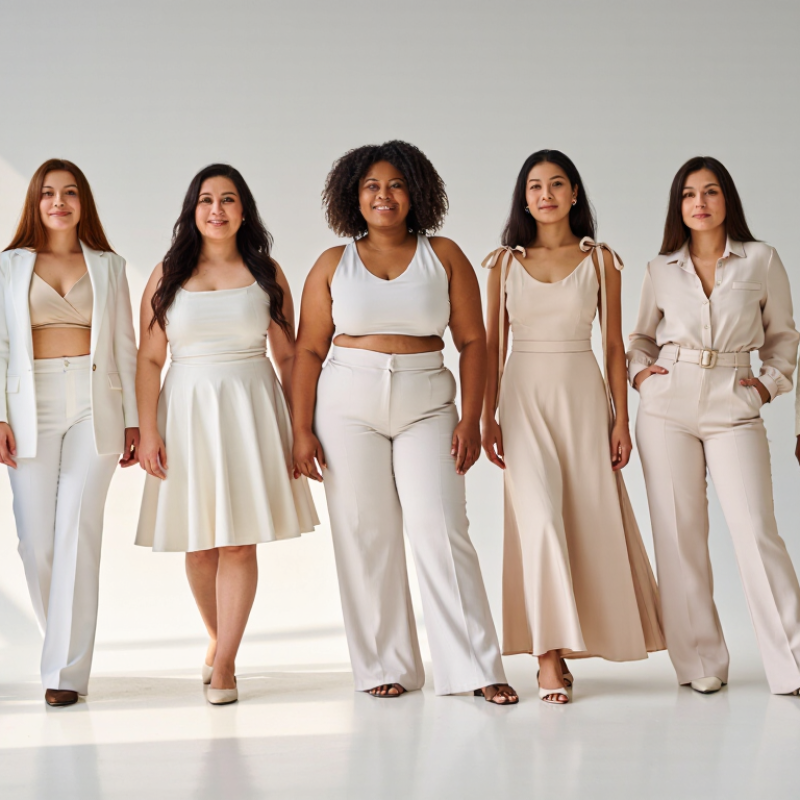
Choosing Women’s Clothes for Every Body Type
Understanding body proportions matters more than chasing a labeled “ideal” shape. Measure your shoulders, bust, waist, and hips while standing naturally. Clothing should follow your actual lines, not an imagined category. In fitting consultations, I often see a small waist paired with fuller hips, or a short torso with long legs. These details change how garments sit. Tip 1: Compare proportions, not clothing sizes. Tip 2: Check where seams rest. A shoulder seam should not slide down your arm.
Personal fit preferences deserve equal attention. Some women prefer structure, while others need soft movement. Tip 3: Decide how much ease feels comfortable before shopping. Tip 4: Test sitting, walking, and reaching. A dress may look excellent while standing but pull across the back when you move. Tip 5: Notice fabric behavior. Firm cotton can define shape, while fluid fabric may skim it. Neither choice is automatically better.
Small adjustments often improve balance. Tip 6: Try cropped jackets for a longer-looking leg line, or longer layers for gentle vertical movement. Tip 7: Use tailoring when the garment is nearly right. I still get this wrong sometimes; a visually balanced outfit may feel restrictive after an hour. Keep a note of those moments. Your comfort feedback is practical evidence, not a minor preference. A mirror shows proportion, but daily movement reveals fit.
Understanding body proportions and personal fit preferences starts with accurate measurements. The chart below shows mean waist circumference among U.S. women by age group, based on CDC/NCHS data from 2015–2018.
Use waist measurements together with bust and hip measurements when selecting clothing. A larger or smaller measurement does not define body type; it helps guide sizing, garment ease, and preferred fit.
Source: CDC National Center for Health Statistics, National Health and Nutrition Examination Survey, 2015–2018. Values are population means and should not replace individual measurements.
Choosing women’s clothes becomes easier when you study the cut, not only the size label. In my fitting experience, a V-neck often lengthens a fuller bust and draws attention upward. Wrap tops can define the waist, but firm fabric prevents unwanted gaping. A-line skirts skim wider hips without clinging. They move well.
For straighter figures, curved seams, peplum hems, and belted jackets can create gentle shape. If your shoulders are broader than your hips, try wide-leg trousers with a softer, open neckline. They balance the outline.
High-rise trousers can support a shorter torso, while mid-rise styles may feel more comfortable on a longer torso. A cropped jacket can also change the visual proportion, though its hem should finish above or below the widest hip area.
For an hourglass shape, look for princess seams, shaped blazers, and dresses that follow the waist without squeezing it. Apple-shaped bodies may prefer fluid tops with structured shoulders and straight or bootcut trousers. These are useful guidelines, not rules. Body shapes overlap, and posture changes the fit. I still choose the wrong cut sometimes. A garment can look ideal on a chart but pinch when I sit. Check the shoulder seam, bend your elbows, and walk before buying. Comfort is practical evidence. Lighting can mislead, too, so inspect the fabric near a window.
Tip 1: Start with fabric, not the size label.
Medium-weight cotton, linen blends, and soft twill usually create cleaner lines. Very thin jersey may cling around the waist. Heavy boucle can add volume across the shoulders. Textile Exchange’s 2024 Materials Market Report recorded 124 million tonnes of global fiber production in 2023. Choosing durable, breathable fibers can support longer wear, not only visual balance.
Tip 2: Use color to guide the eye.
A darker lower half can visually ground fuller hips. A brighter neckline can draw attention upward. However, “slimming colors” are not universal rules. Skin tone, lighting, and personal contrast matter. The Color Marketing Group’s 2024 consumer research highlights growing interest in expressive, individualized color choices. I would test navy, olive, or rust before relying on black. Sometimes my own first choice looks flat in daylight.
Tip 3: Treat patterns as adjustable tools.
Smaller prints often feel quieter on a petite frame. Larger checks can suit taller proportions, especially with calm, solid-colored accessories. Vertical lines may lengthen an outfit, but broken lines can work better than rigid stripes. The Ellen MacArthur Foundation reported that clothing utilization fell 36% over 15 years. Better proportion also means choosing garments you will repeatedly wear. Try one patterned piece, then check the silhouette from the side. A mirror can reveal what a fitting room hides.
Choosing women’s clothes for every body type begins with observing proportions, not following rigid shape labels. A neckline can change the visual balance of an outfit within seconds. V-necks often lengthen a shorter-looking neck, while boat necks draw attention toward the shoulders. A square neckline can create structure without feeling severe. Try each option while standing naturally, not while holding your breath.
Sleeves and hemlines deserve equal attention. A sleeve ending at the widest part of your arm may add unwanted emphasis. Moving it slightly above or below that point often creates a cleaner line. Three-quarter sleeves can feel practical, but they do not suit every arm proportion. I once chose a sleeve length because it looked elegant on a mannequin. It felt awkward in motion. That mistake still influences my fitting advice. For skirts and dresses, hemlines should respond to height, footwear, and leg shape. A hem just below the knee may look polished, while a midi length can shorten the silhouette on some bodies. Walk, sit, and raise your arms before deciding. Fabric movement reveals problems that a mirror hides. Tailoring can adjust a hem or sleeve, but it cannot always correct an unsuitable neckline. Personal comfort matters too. A technically balanced garment may still feel wrong. Test the fit under daylight, with relaxed posture, and from several angles.
Tip 1: Begin with comfort, not a size label. Measure your waist, hips, and bust, then compare them with each garment’s chart. Sizing changes between cuts and fabrics.
Tip 2: Check movement. Sit, reach, and walk before buying. A jacket may look polished while feeling restrictive at the shoulders.
Tip 3: Choose breathable materials for daily wear. Soft cotton, linen blends, and flexible knits can reduce rubbing around the waist and thighs.
Tip 4: Notice where seams and waistbands rest. Flat seams, adjustable ties, and gentle elastic often create a better fit.
Tip 5: Build outfits around your proportions, not outdated body rules. A cropped jacket can balance wide-leg trousers, while a longer top may feel easier with fitted bottoms.
There is no universal formula. I once ignored this and kept uncomfortable clothes because they looked “flattering” online.
Tip 6: Alter useful garments when possible. Shortening sleeves or adjusting a waistband can make a simple piece feel custom-made. A qualified tailor can assess these changes safely.
Tip 7: Test the fabric under real conditions. Bend your knees, raise your arms, and check whether it becomes sheer or pulls. Keep a small record of what feels good after several hours. Comfort is personal, and preferences may change with seasons, work routines, or movement needs.
Start with fabric, not the size label. Medium-weight cotton, linen blends, and soft twill often drape neatly. Very thin jersey may cling around the waist. Heavy textured fabric can add shoulder volume. Breathability matters for repeated wear.
No fabric works perfectly for everyone. Check the garment while standing, sitting, and moving. A soft twill may look polished but feel restrictive. Comfort can change the entire result.
A darker lower half can visually ground fuller hips. A brighter neckline can draw attention upward. Black is not a universal slimming choice. Test navy, olive, or rust in daylight.
Skin tone, lighting, and personal contrast affect color. A shade may look elegant indoors but appear flat near a window. I sometimes trust the fitting-room mirror too quickly. Daylight deserves another check.
Smaller prints often look quieter on petite frames. Larger checks may suit taller proportions. Calm, solid accessories can reduce visual noise. Try one patterned piece first.
Not always. Vertical lines can lengthen an outfit, but broken lines may look softer. View the silhouette from the side. A mirror can reveal hidden width.
V-necks often make a shorter-looking neck appear longer. Boat necks emphasize the shoulders. Square necklines add structure without looking severe. Test each style with relaxed posture.
A sleeve ending at the widest part of your arm may add emphasis. Move it slightly above or below that point. Three-quarter sleeves are practical, but not universally flattering. Motion matters more than mannequin elegance.
Consider height, footwear, and leg shape together. A hem just below the knee can look polished. A midi length may shorten some silhouettes. Walk, sit, and raise your arms before deciding.
Tailoring can adjust sleeves and hemlines. It cannot always correct an unsuitable neckline. Check the garment from several angles. If it feels wrong, the proportions may not be the only problem.
Choosing the right clothing begins with understanding your body’s proportions, comfort needs, and personal style preferences. This guide to how to choose women's clothes for different body types explains how to select cuts that create balance and highlight your favorite features without limiting your choices. Rather than following strict rules, consider how garments fit across the shoulders, waist, hips, and legs, then adjust styles to suit your natural shape.
Fabric weight, color placement, and patterns can also influence the overall appearance of an outfit. Structured materials may add definition, while softer fabrics create a relaxed look. Thoughtful choices in necklines, sleeve lengths, and hemlines can improve comfort and proportion, especially when tailored to your height and movement. By combining flattering shapes with practical fabrics and versatile colors, you can build a comfortable wardrobe that supports confidence and works for every body type.
