For global buyers, China’s women’s apparel market is not one uniform trend story. It is a fast-moving mix of polished workwear, relaxed everyday pieces, occasion dressing, and practical outdoor styles. The opportunity lies in reading local demand carefully, then matching it with the right fabric, fit, price, and delivery plan. Small details matter: a breathable lining, a useful pocket, or a color that works across seasons.
McKinsey and The Business of Fashion’s State of Fashion 2025 report forecast global fashion sales growth of 2 to 4 percent in 2025. That is a forecast, not a guarantee. It signals a market where buyers may need tighter assortment choices and sharper value propositions. Imran Amed, founder of The Business of Fashion, has described fashion as “a business of optimism.” Optimism helps, but it cannot replace careful sourcing or evidence from customers.
So, what trends are shaping the women’s apparel industry? For China-focused buyers, the useful answer is a combination of consumer insight and disciplined product decisions. Track demand for versatile silhouettes, season-ready fabrics, and designs that move easily from commuting to casual settings. Then test those ideas against sell-through, returns, and supplier capabilities. Not every popular look becomes a reliable order. Some judgments will be wrong; that is part of the work. This guide explores the trends worth watching and the questions global buyers should ask before committing to volume.
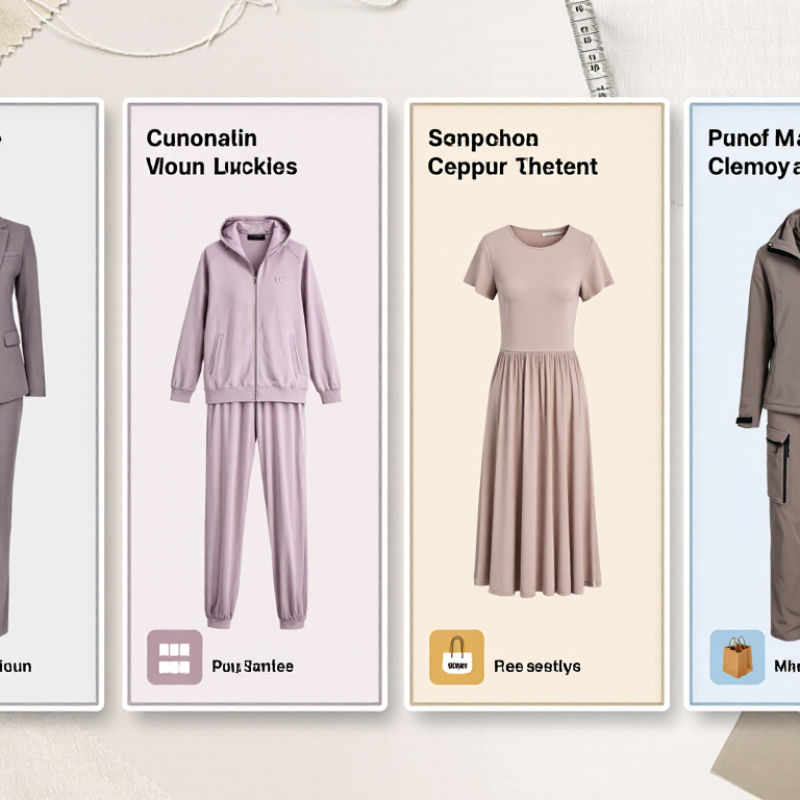
China’s women’s apparel market is not one uniform supply base. It includes garment factories, fabric mills, specialist workshops, trim suppliers, and trading companies. Their capabilities and minimum order quantities can differ widely. Some teams handle pattern changes quickly; others are better suited to repeat production. Ask how measurements, fabric details, and quality checks are recorded. Small details matter.
Key categories include T-shirts, blouses, dresses, trousers, knitwear, outerwear, and activewear. Lightweight tops may use cotton or blended fabrics, while dresses often involve more attention to drape, lining, and fit. Knitwear brings different considerations, such as yarn weight and stretch recovery. Seasonal ranges also influence fabric choices and delivery schedules. Fit still varies.
For global buyers, category knowledge is only a starting point. A polished sample does not guarantee consistent bulk production, and a low unit price may exclude important finishing or inspection steps. Compare fabric composition, shrinkage results, stitching quality, size grading, and reorder lead times. Request clear specifications and check a production sample before confirming quantities. These checks take time, and they can still miss issues. But they make supplier comparisons more grounded.
The supply base includes garment factories, fabric mills, specialist workshops, trim suppliers, and trading companies. Their minimum order quantities and skills vary. Ask how they record measurements and quality checks.
Common categories include T-shirts, blouses, dresses, trousers, knitwear, outerwear, and activewear. Dresses need careful attention to drape and lining. Knitwear requires checks on yarn weight and stretch recovery. Fit still varies.
Compare fabric composition, shrinkage results, stitching, size grading, finishing, and reorder lead times. Request clear specifications and review a production sample. A low price may leave out important checks.
Check fabric weight, shrinkage, colorfastness, and seam strength. Wash the first sample and measure it again. Small changes matter.
Ask where fibers come from, how wastewater is treated, and what happens to leftover fabric. Recycled fibers may reduce raw material demand, but washing can release microfibers. Paperwork is not proof.
Many suppliers support smaller trials, digital pattern changes, and quicker sampling. These options help test fit and fabric before larger orders. Fast production can still hide quality or workplace pressures.
Request supplier licenses, audit records, material test reports, and traceability documents. Verify fiber content, care labels, and destination-market requirements. One certificate may not cover every market.
Review bust, waist, sleeve, and hip measurements after grading. Photograph labels, stitching, and cartons before shipment. Keep approved samples and signed specifications. Still, no checklist catches everything.
Revisit defects, delivery timing, and weak communication points with the supplier. Check whether subcontracting and working-hour records are clear. Repeated assumptions can become costly.
China’s women’s apparel market spans everyday essentials, workwear, occasion clothing, activewear, and seasonal fashion, serving consumers with varied lifestyles and preferences. Buyers assessing what trends are shaping the women's apparel industry should consider demand for versatile designs, comfortable fits, expressive silhouettes, and clothing that balances style with practicality. Popular directions include relaxed tailoring, adaptable layering, and a mix of contemporary and understated looks, while preferences continue to evolve across age groups and regions.
Fabric choice, manufacturing capability, and sustainability are also increasingly important to product development. Materials that offer comfort, durability, and easy care can support broader appeal, while responsible production practices may strengthen supplier relationships. For global buyers, successful sourcing requires clear product specifications, consistent quality checks, transparent communication, and attention to applicable safety, labeling, and compliance requirements in destination markets. Together, these considerations help buyers build collections that respond to consumer needs while supporting reliable, responsible supply.

 Dahab Fashion