Choosing among China’s OEM and ODM womenswear factories is not a price comparison alone. It is a decision about fit, workmanship, communication, and repeatability. McKinsey and The Business of Fashion’s The State of Fashion 2025 describes a fashion market facing modest growth and continued pressure on costs. For buyers, that makes careful supplier evaluation more important, not less.
When researching how to choose an OEM ODM women's clothing factory, look beyond polished product photos. Ask for a sample made from your actual fabric, then inspect the seams, labels, grading, and measurements under ordinary light. Request the factory’s minimum order quantity, sample timeline, production capacity, and quality-control process in writing. A confident sales reply is useful. A consistent sample is better. One sample can still mislead.
As apparel-sourcing scholar Dr. Sheng Lu emphasizes in his research on global fashion supply chains, sourcing decisions should account for the wider supply-chain context—not just the unit cost. Treat that as a practical reminder, rather than a shortcut: ask who handles pattern development, where production takes place, and how problems are reported. The answers may reveal more than a factory tour. This guide compares ten China-based OEM and ODM womenswear manufacturers and offers a grounded way to assess their capabilities. No factory is perfect; even a promising partner deserves careful verification.
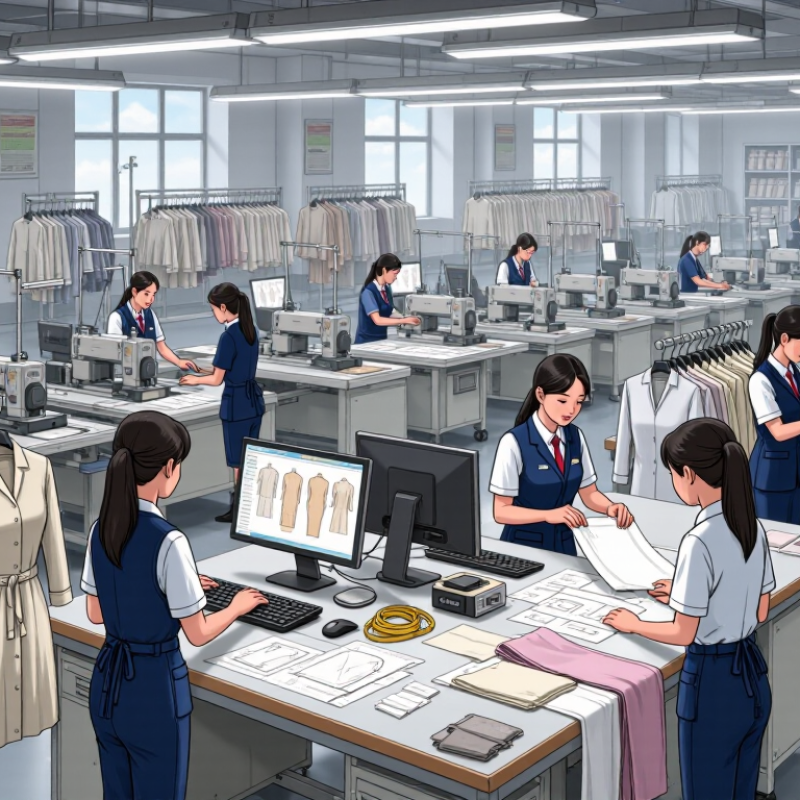
China’s women’s clothing factories commonly operate through OEM or ODM models. OEM production follows your designs, measurements, fabric choices, and packaging instructions. You control the product direction. The factory mainly converts specifications into finished garments. This model suits established labels with clear tech packs and approved patterns.
ODM factories offer existing designs that can be adjusted for your market. Their teams may provide sketches, fabric options, size grading, and sample development. This route can reduce development time. It may also limit originality if several buyers choose similar details. A factory’s design strength should never replace careful product review.
Factory visits reveal practical differences. Check cutting tables, sewing lines, pressing areas, and final inspection stations. Ask how workers record measurements and handle sewing defects. Request a sample made from the same fabric and accessories used in bulk production. A perfect sample can mislead.
Confirm minimum order quantities, sample fees, production capacity, and realistic lead times in writing. Ask for inspection records, material test reports, and a clear correction process. Communication quality matters too. Slow replies often create expensive confusion later. However, fast replies do not prove technical competence.
A useful evaluation compares both models against your internal resources. OEM may demand stronger pattern knowledge and detailed documents. ODM may require sharper editing and stricter ownership terms. Some factories claim to offer both, but their actual strengths can differ by product category. Review several samples before making a commitment. Small details matter: uneven hems, weak buttons, rough seams, or inconsistent sizing can damage customer trust.
A practical comparison of common Chinese women’s clothing factory models for private-label, custom, and ready-to-develop collections.
| No. | Factory Model | Service Type | Typical Product Focus | Typical MOQ Range | Sample & Development Capability | Typical Bulk Lead Time | Main Advantages | Key Risks to Check | Best Fit For | Selection Priority |
|---|---|---|---|---|---|---|---|---|---|---|
| 1 | Full-Service Private-Label Factory Integrated pattern making, sourcing, production, and packing | OEM ODM | Women’s dresses, tops, skirts, trousers, and coordinated collections | Commonly 100–500 pieces per style, depending on fabric and construction | In-house sampling, tech-pack review, pattern adjustment, and size grading | Approximately 30–60 days after approval of samples and materials | One supplier can manage most of the product development and production process | Confirm production capacity, quality-control ownership, and material traceability | Growing brands seeking a single manufacturing partner | |
| 2 | Low-MOQ Startup Factory Flexible workshop designed for small initial orders | OEM | Small-batch casualwear, boutique apparel, and online brand collections | Commonly 30–150 pieces per style or color | Basic pattern development and sample production; limited complex engineering | Approximately 20–45 days for approved repeatable styles | Lower inventory risk and easier market testing | Unit costs may be higher; verify consistency between sample and bulk production | Startups, capsule launches, and test collections | |
| 3 | Trend-Driven ODM Factory Supplier develops designs based on seasonal market demand | ODM | Seasonal dresses, fashion tops, knitwear, and trend-led separates | Commonly 100–500 pieces per selected design | Ready design library, fabric suggestions, sample adaptation, and color updates | Approximately 25–50 days, depending on fabric availability | Faster product creation with less design work required from the buyer | Design exclusivity may be limited; request written terms for adaptation and ownership | Retailers needing fast seasonal assortments | |
| 4 | Premium Cut-and-Sew Factory Focused on workmanship, construction, and higher-end finishing | OEM | Tailored garments, structured dresses, blazers, coats, and premium separates | Commonly 200–800 pieces per style, with higher requirements for complex garments | Detailed pattern engineering, toile development, fitting sessions, and workmanship review | Approximately 45–75 days after final approval | Better control of fit, construction, pressing, and finishing details | Higher development cost and longer sampling time; inspect workmanship standards | Premium and contemporary fashion labels | |
| 5 | Knitwear and Sweater Specialist Factory equipped for knitted garments and yarn-based production | OEM ODM | Sweaters, cardigans, knitted dresses, knit tops, and lightweight layers | Commonly 100–500 pieces per color and style | Yarn selection, gauge development, stitch programming, sampling, and wash testing | Approximately 45–90 days, depending on yarn and programming requirements | Specialized control of gauge, hand feel, shape retention, and knit construction | Check shrinkage, pilling, colorfastness, and yarn availability before production | Brands requiring consistent knitwear quality | |
| 6 | Sustainable and Certified Factory Production system supported by environmental or social compliance programs | OEM ODM | Organic cotton, recycled-fiber apparel, responsible viscose, and traceable basics | Commonly 200–1,000 pieces per style, depending on certified material requirements | Material documentation, certification review, lab testing, and standard sample development | Approximately 45–90 days because approved materials may require additional planning | Stronger documentation for responsible sourcing and buyer compliance programs | Verify certificate scope, validity, transaction certificates, and subcontractor controls | Brands with sustainability claims or retailer compliance requirements | |
| 7 | Performance and Activewear Factory Technical apparel producer with functional fabric and seam expertise | OEM | Sports bras, leggings, yoga wear, outer layers, and moisture-management garments | Commonly 300–1,000 pieces per style, depending on fabric and testing needs | Technical pattern development, stretch fitting, bonded or flatlock seam options, and testing | Approximately 45–90 days after fabric and performance standards are approved | Better handling of stretch, recovery, comfort, durability, and functional finishes | Test colorfastness, fabric recovery, opacity, seam strength, and wash performance | Activewear, athleisure, and technical lifestyle brands | |
| 8 | Uniform and Workwear Manufacturer Factory organized for repeatable specifications and replenishment orders | OEM | Office uniforms, hospitality apparel, healthcare garments, and workwear | Commonly 300–2,000 pieces per style, with quantity depending on program size | Specification-based sampling, logo application, size-set approval, and repeat-order control | Approximately 45–90 days, with replenishment often faster after materials are reserved | Reliable repeat production, standardized sizing, and bulk-order planning | Confirm color continuity, size tolerance, replacement policy, and embroidery or printing quality | Corporate programs and long-term replenishment accounts | |
| 9 | Fast-Fashion Quick-Turn Factory Production system optimized for short fashion cycles | ODM OEM | Trend-led tops, dresses, skirts, lightweight outerwear, and frequent new drops | Commonly 100–500 pieces per style, subject to capacity and fabric availability | Rapid sample turnaround, existing blocks, ready fabrics, and simplified revisions | Approximately 15–40 days for simple, approved styles | Shorter development cycles and faster response to changing market demand | Check quality consistency, fabric substitution rules, overtime practices, and capacity pressure | Brands working with short selling windows | |
| 10 | Export-Compliance Production Partner Factory experienced with international inspection and documentation procedures | OEM ODM | Multi-category women’s clothing for overseas wholesale and e-commerce channels | Commonly 200–1,000 pieces per style, depending on buyer requirements | Tech-pack execution, pre-production samples, measurement reports, and inspection coordination | Approximately 40–80 days after approval of materials and pre-production samples | More structured export paperwork, inspection readiness, and international communication | Confirm testing capability, packaging rules, shipping terms, and responsibility for nonconformity | Importers, wholesalers, and international online retailers |
Note: MOQ, sampling time, and production lead time are typical industry planning ranges rather than guaranteed terms. Actual requirements vary according to fabric availability, garment complexity, order quantity, testing, seasonality, and factory capacity.
OEM factories make garments from your designs, measurements, and material choices. ODM factories offer existing designs that can be adjusted. Less development time.
OEM works well when you have detailed technical packs and approved patterns. You also need clear fabric and packaging instructions.
Check the pattern-making process, design ownership terms, and available fabric options. Similar details may appear in other buyers’ products. That deserves thought.
Look at cutting tables, sewing lines, pressing areas, and final inspection stations. Ask how staff record measurements and correct sewing defects.
No. A sample made with different fabric or accessories may mislead. Not foolproof. Review several samples and inspect bulk production.
Check seam strength, hems, button attachment, shrinkage, color consistency, and size grading. Rough seams can be easy to miss.
Record minimum order quantities, sample fees, lead times, payment stages, and defect limits. Also document material approvals and correction steps.
Send a technical pack and see whether the team flags missing measurements. Dated updates help, but fast replies do not prove technical skill.
It may involve weaker fabric, rushed sewing, or unplanned subcontracting. Start with a manageable order and reassess after delivery.
Choosing the right partner begins with understanding the difference between OEM and ODM women’s clothing factories. OEM manufacturers produce garments according to your designs, while ODM factories offer existing styles that can be customized with fabrics, colors, labels, or measurements. To determine how to choose an OEM ODM women's clothing factory, compare each supplier’s production capacity, specialization, quality standards, pricing structure, and minimum order quantities. A factory that suits one brand may not suit another, so your decision should match your product category, budget, and growth plans.
Before placing an order, review certifications, material control procedures, sample quality, communication efficiency, and production management. Ask for clear quotations, timelines, inspection methods, and solutions for handling defects or delays. Sampling is especially important because it allows you to verify fit, workmanship, fabric performance, and consistency before mass production. By evaluating capabilities, transparency, responsiveness, and quality control together, you can select a reliable China-based women’s clothing manufacturing partner for long-term cooperation.

 Dahab Fashion